I don't want to lose you straightaway because the recipe calls for Eland. You're not going to find it in your local market, but try a different type of cocktail sausage or get regular-sized sausages, cut them up into 2 inch pieces and go for it. This is a delicious recipe; great for summer grilling and definitely has a safari/South African braai vibe.
The African Kitchen is also a great cookbook. Lots of great recipes that will make you feel like you're back on safari, and great photos scattered throughout.
Bacon-wrapped Eland Wors with Mealies and Lemon Leaves Adapted from The African Kitchen by Josie Stow and Jan Baldwin Serves 6
Ingredients 3lb 5oz eland wors or other cocktail sausages *you may also substitute regular sized sausages cut into 2-inch chunks; 18 pieces total 24 slices bacon 12 prunes or pitted dates 3-4 mealies (ears of corn) 1/2 c olive oil 24 lemon or bay leaves salt and freshly ground pepper, to taste
Whatever sausages you use, ensure that you have 18 2-inch pieces of sausages. Wrap a slice of bacon around each sausage. Cut the remaining bacon slices in half and wrap them around the prunes (or dates). Slice the mealies into 1 1/4 inch rounds.
Thread the bacon-wrapped sausages onto the skewers, alternating them with the lemon leaves, bacon-wrapped prunes and mealies. Each skewer should end with a sausage. Brush the kebabs with a little olive oil and season with salt and pepper just before cooking.
Cook on a grate over hot coals (preferably under a shade tree out in the bush!). Turn the skewers occasionally to cook throughout. Alternatively, broil for 10 minutes, turning, until the wors is cooked. The perfect meal on a stick. Yum!
Reptiles are classified as ectothermic, which means that they are unable to regulate their body temperature internally and are therefore dependent on environmental heat sources. On safari, we frequently see reptiles sunning themselves. Reptiles will move in and out of sunny spots, retreating to shade to keep their body at a constant temperature.
This recipe comes from our friends at Zuka Lodge in the Phinda Private Game Reserve in South Africa. It's the perfect dinner to serve under the stars.
Ingredients Serves 8
4 chickens 4 tbsp sea salt freshly ground black pepper 4 tbsp olive oil 4 cans of your favorite beer 4 bay leaves 4 cinnamon sticks 20 ml coriander seeds 4 red chillies 4 tsp cumin seeds 4 tbsp Dijon mustard 4 tbsp Dukkah Spice Blend (you can find commercially prepared Dukkah in speciality stores. If you're unable to find any, stay tuned to a future blog for a Dukkah recipe).
Season chickens with salt, pepper and olive oil. Open cans of beer. Drink a mouthful of each (or I suppose you could pour out the equivalent!) and divide bay leaves, cinnamon, coriander, chillies and cumin between the 4 cans.Place the cans on a baking try and 'sit' a chicken firmly on each can. Roast in a preheated 375 degree oven or grill for 35 minutes. Remove from oven and rub with mustard and Dukkah spice blend, then cook for 25 additional minutes at 325C.Rest the chicken for 10 minutes. To serve, split the chickens in half, pile on a platter and sprinkle with more Dukkah spice.Visit the boma in the photo yourself and try some of the cooking directly from Zuka Lodge. Give us a call to start planning your own customized South African safari!
Photo courtesy & Beyond Zuka Lodge, recipe adapted from A Kitchen Safari
We want to share this 'day in the life' from Sean Carter and our friends at Wilderness Safaris. Sounds like a great (and not atypical) day at Pafuri Camp in the Makuleke Concession in Kruger National Park, South Africa.
I was hosting six great guests who are all birders and therefore I knew the pressure was off about searching only for big game or the "Big Five." Our second evening together proved to be quite incredible.
We headed out on our afternoon drive along Luvuvhu West. Our plan was to drive to a recent elephant carcass which has been fascinating to view, as well as being a hive of activity. On the way there we bumped into a lone elephant bull, the first of what would turn out to be a very rewarding few hours. When we arrived at the carcass, as expected, there was an entourage of vultures (Lappet-faced, White-backed, White-headed and Hooded) and a number of hyaena picking the bones dry. The smell was quite unbearable and it wasn't long before everyone in the vehicle was ready to head off.
As we drove back towards camp we were called with the news that we had just driven past a leopard. Needless to say we turned around and headed back finding the camouflaged leopard lying flat in an appleleaf tree. She was extremely relaxed and we watched her from 30 metres away for about 45 minutes. She eventually stretched and gracefully climbed down the tree. She had been watching impalas in the distance and we followed her towards them. The impalas were quick to spot her and started panicking at the same time as a huge herd of buffalo appeared. All of this was taking place at the same time as the sun was setting over the Hutwini Mountains ahead.
We had just lost sight of the leopard when we heard a faint mumble behind us. Lo and behold there were two rhino making their way towards us. This was by far the best sighting I have had of rhino at Pafuri as they were in the open instead of making off into the distance which has been my usual experience.
At this point we chose to head back to camp, having had a fabulous evening, but on the way decided to pass the airstrip to see if could catch a glimpse of the male lion which had been spotted in the area that morning.
We did hear the lion calling, but unfortunately our luck had run out as our search proved hopeless. However, we did see a baby chameleon, a greater bushbaby, an African wild cat, two Barn Owls, an African Owl and two Pel's Fishing-Owls before getting into camp.
After a celebratory dinner I was heading to the staff village only to come across a lioness 20 metres from the boardwalk. Another incredible day in Africa!
From our partners at Wilderness Safaris comes this excellent game report from Chitabe Lediba.
Weather The month of January has had some good rainfall and we've recorded 295mls, which in previous years would have constituted half our annual rainfall. We've also had some spectacular storms, as only Africa can produce, with laser-like lightning shows coupled with thunder that at times literally made the earth shake.
Landscape The concession is alive with youngsters of all living creatures. Everywhere you look there is an enormous variety of birds - especially waterbirds - and animals and the flora is looking beautifully lush and green. It truly has become a paradise.
Wildlife The wildlife sightings have been spectacular as usual, even with the rain. Chitabe can proudly announce a few new family members in our various groups of predators. The collared cheetah was found and to the surprise of everyone she proudly paraded her four new gorgeous cubs. However, it does appear that towards the end of January, she may have lost one of the cubs as we only spotted three little faces on the last few occasions that we have seen them. Mortality rates among cheetah cubs is high, so we do keep fingers crossed that the mother's good parenting skills will enable the remaining three to survive.
Our resident leopard are also sporting and nursing new offspring, together with our two small prides of lion. The Chitabe pack of wild dog have been seen only a couple of times during the month, which is normal as this is the time of year that they traverse their home ranges. Numbers fluctuate between 24 and 26 dogs, but we are pretty sure that the pack is still at full strength with a total compliment of 26 members.
Love seems to be in the air as our guests and guides spotted both leopard and lion mating. We hope therefore that we can announce some new arrivals in the near future.
All the general game including impala, giraffe and zebra are also in abundance and all proudly showing off their young. It is such a treat to watch these young animals running and playing with their herd mates, so full of energy and excitement.
Birding Birding has been absolutely amazing. The summer migrants that visit us at this time of year are still keeping the camp and concession entertained by their beautiful song and chatter. Thanks to the rainfall all the floodplains and depressions have filled up, attracting a huge variety of hunters and waders, congregating together as friends.
Camp News During the last two weeks of January all the old rooms at Chitabe Lediba were dismantled and removed and the sites have been prepared for new structures. In addition to all new guest rooms, Chitabe Lediba will also be replacing the swimming pool and the decking surrounding the pool as well as putting in a new kitchen, laundry and a couple of storerooms.
Photographs courtesy Bill and Barton Barker; Sondra Lee and Debra
The Elephant Whisperer is about a conservationist in South Africa who takes in a group of unwanted elephants on his Zululand game reserve. While the title is a bit trite, the story itself certainly isn't.
Lawrence Anthony is approached by the Elephant Managers and Owners Association about a 'troublesome' group of elephants in Mpumalanga, and is as asked by EMOA to take the animals in. This is ostensably because Anthony has a way with animals (and his own game reserve). Despite major reservations, he does so; as his acceptance of the elephants is their only chance. They will otherwise be destroyed. Predictably, it changes his life.
The book is the ensuing story of Anthony's 'way' with animals. He works to habituate the elephants to human presence and to correct their 'troublesome' behavior, he and his staff protect them from poachers, and eventually they introduce the elephant family to guests to help maintain the upkeep of Thula Thula, Anthony's game reserve. There are highlights and heart-wrenching moments, and overall it's a very satisfying read.
Care to visit Thula Thula and these very special animals? Give us a call!
Zambia is a very special place. The birthplace of the walking safari is heaving with wildlife but not with people. It's off the beaten track. It has the famous (Zambezi River), the infamous (Victoria Falls) and the off-the-map (Kafue, North and South Luangwa).
We have a special opportunity for you to take to the skies in style. Gaze out over the seemingly never-ending scenic splendor and fly eye-to-eye with eagles while watching herds of wildlife and flocks of endangered Wattled and Crowned Cranes far below.
Africa Adventure Consultants and Wilderness Safaris are thrilled to offer an exceptional hot air ballooning experience in the Kafue National Park - one of Zambia’s prime and largest wildlife destinations. Stay for three nights in one of three stunning camps on the Busanga Plains – Shumba, Kapinga or Busanga Bush Camps – and be treated to this breathtaking experience FREE OF CHARGE - which concludes with a champagne breakfast under a grove of fig trees! Call us to plan your customized Zambian adventure!
*Offer valid from August 1 to October 31, 2011
Photos courtesy Wilderness Safaris and Gretchen Healey
Sanctuary Chichele Presidential Lodge has opened and they are welcoming their first guests. In celebration of the opening of the iconic hilltop game lodge in Zambia’s South Luangwa, we are pleased to offer three nights for the price of two. This historic property is open year round. In addition, the lodge accepts children of all ages – making it the ideal destination for the family holiday of a lifetime! It has one interconnecting suite and two triple rooms that are perfect for families. This special opening offer is valid for travel from 1 February–15 June 2011 and for new bookings from 15 January 2011. Call us to book now.
Sanctuary Chichele Presidential Lodge was originally built for Kenneth Kaunda, the former Zambian president, in the 1970s and the original colonial style has been retained in the furnishings. A long veranda stretches outside the dining room, from which guests are afforded views down the valley to the Luangwa itself. When possible, dinner is served outside. On cooler nights, roaring fires take the chill out of the air. The roar of lions or the saw of leopards can often be heard from the wooded valleys that surround the lodge. Each of the ten elegant suites at Sanctuary Chichele comprise of four-poster beds, air conditioning, and private veranda. In keeping with the rest of Chichele, the suites are decorated in an understated colonial style with a fully appointed en-suite bathroom. Large French windows offer a light, airy feel to the suites, opening onto your private terraces -the ideal vantage point to relax and enjoy the wildlife.
Game viewing at South Luangwa is considered to be some of the best in the world. It is a notably good place to see leopards, particularly in the dry season when they have less cover in which to hide. From Sanctuary Chichele Presidential Lodge, guests have the particular privilege of being able to go on night game drives when it is possible to see all sorts of animals that are seldom seen by day - like leopard, hyena and bush baby. Plains game, such as antelope and zebra, are not scared by the lights so guests are able to get very close to animals for fabulous photographs. The early evening is the best possible time to see diurnal animals and a little later is the best time for nocturnal wildlife, so a game drive combined with sundowners gives guests the best of both worlds.
There are also wonderful opportunities in the area for walking safaris. Guided walks are conducted by a professional guide and an armed parks scout. It is on foot that Sanctuary’s guides can show travellers some of the most fascinating signs of the bush, many of which are hard to spot from a vehicle. Out in the bush with an armed game scout and a guide, travellers can follow animal tracks along sandy paths. It’s not just the big animals that are fascinating – termites, dung beetles and chameleons all have their stories to tell too. The park hosts many herds of the endemic Thornicroft giraffe which can always be found in the prolific Mopane woodland on the valley floor.
Call us so we may work with you to craft a customized Zambian adventure that includes a visit to Chichele Presidential Lodge and all the wonders that Zambia has to offer.
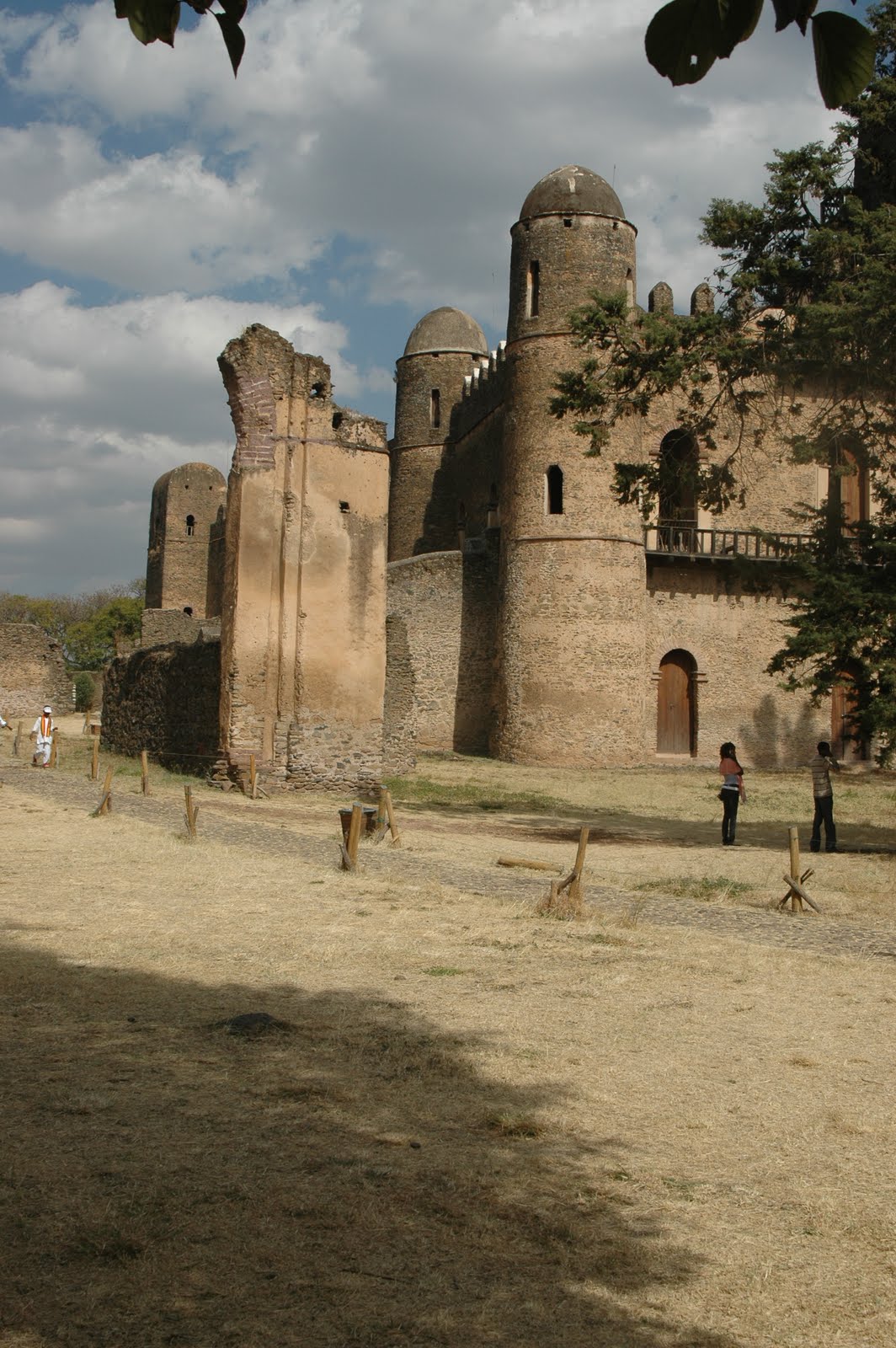
The drive from Bahir Dar to Gondar is a pleasant three hour excursion north along Lake Tana through farmland, mountains and plains. As with many Ethiopian towns, Gondar is very hilly, making it a hiker's delight and a challenge for those who are less mobile.
Since we arrived on the eve of the famous Timkat Festival, the streets were filled with Christian faithful from all over the region, here to celebrate Ethiopian Epiphany which commemorates the baptism of Christ according to the singular Ethiopian Orthodox Church. In Ethiopia, holidays are different (Christmas is January 8), as is the year (7 years behind the Western calendar) and even the time is told differently (6 pm our time equals noon Ethiopia time).
Gondar is worth a visit anytime to see 17th century castles and churches built by King Fasilidas and his progeny. It also makes for a great base from which to explore the beautiful Simien Mountains, home to endemic species such as Galada baboons, Walia Ibex and Simien red fox. We were here for Timkats, which exceeded my expectations in terms of pageantry, attendance and exuberance. Part religious service, part parade, and part party, it was a celebration in every sense of the word.
Really the festival spans several days. People attending the festival dress in sparkling whites and the priests in brilliant reds, greens, purples and golds. The festival begins with parades of arcs or "holy af holies," without which no Ethiopian church is consecrated. These are mini-replicas of the original Arc of the Covenant which, according to Ethiopian tradition, holds Moses's original 10 commandments and is said to have been brought my Menalik I from Jerusalem after he took it from King Solomon's temple. (Ethiopians believe Menelik I was the son of King Solomon's affair withe the Queen of Sheba who they believe was Ethiopian, though many scholars are not convinced). The arcs are brought from 40-plus regional churches to be blessed with holy water from King Fasilidas's pool.
The parade of arcs is led by bat wielding boys whose enthusiastic chants and jumps kept more than one onlooker far on the sidelines. Next come guards or escorts in red and and attendants in white. Sometimes floats are involved and there is lots of singing and chanting, drumming and horn blowing. Grass and heavy carpets are laid down before the procession of priests carrying the arcs, wrapped in cloth, on their heads, which are shaded by colorful umbrellas. This goes on for hours until all the arcs reach the walled pool. That night there was much singing, dancing and even fireworks in town while the priests spent the night praying by the pool.
The next morning, the faithful and curious trekked back to the pool for the service, some of which was translated into English for the foreign visitors in attendance. The pool is in an enclosed walled compound big enough for the clergy, some dignitaries, and paying tourists. The majority of people gather around the stone walls. The excitement was too much for some locals who created a mob scene as they pushed toward the walls, trapping the ones in front and causing the police to wield their batons with some force. Inside after much praying and chanting the water is blessed by Ethiopia's archbishop and all hells breaks loose as young men jump into the holy water and people use spray guns to hose the pilgrims. The clergy then parade the arcs back out and the people spend the rest of the day celebrating, some of them into the night.
In retrospect, Timkats was one of the most unique and impressive (and frightening) cultural events I've ever seen. It is certainly a sight to be seen for culture lovers, but people who don't like unruly crowds, noise and walking should stay away. There are also annoyances. I lost a bit of cash to pick pockets, which is not uncommon amongst such crowds. Hotel space is limited and reservations are not always honored, even when they have been paid in full.
The best hotel in town is the Taye, followed by the Goha, and the Qura and others like it. Next stop; Kelly accompanies the group to visit the Southern tribes.
From Lalibela, Bahir Dar is just 20 minutes by plane. A very pleasant town of 250,000 people, Bahir Dar sits at the south end of Lake Tana. Tana is Ethiopia's largest lake and the source of the Blue Nile, which meets the White Nile in Khartoum and then flows to Cairo, Alexandria and the Mediterranean Sea.
In Bahir Dar, we spent the morning visiting the Ura Kindnemihret monastery, one of many that are located on islands and peninsulas on Lake Tana. Getting there by boat makes for a pleasant excursion, especially if you get to see some reed canoes, white pelicans and more. The monasteries feature some vivid and colorful paintings illustrating scenes from the bible. After a tasty lunch we headed to the Blue Nile Falls. Much of the river's water is diverted to the hydroelectric damm so in the dry season the falls are not impressive. Even so, there were plenty of interesting sights to enjoy, making for a fun afternoon.
That night, we enjoyed authentic Ethiopian food in the stylish dining room of our hotel, Kariftu Spa and Resort. Set right on Lake Tana, the hotel is beautiful with huge rooms with wrap-around balconies. The hotel also has a large pool and wide deck with lake views. Guests also get one massage, pedicure or manicure (per room) at the hotel's spa.
Other hotel choices include Summerland, Abyiminch, Tana Hotel, Tana Resort, a Sheraton property.
Photo, left: Amhara man plays the misigo, a one stringed instrument made of goat skin and horse hair.
Lalibela is a must-see on any first visit to Ethiopia, and that's where we headed on the second day of our tour. About an hour's flight from Addis Ababa (if you book the direct flight and twice that with stops), it's a town of approximately 25,000 people who live perched on gorges, bluffs and steep hills in a mountainous and arid region northeast of the capital city.
The main reason to visit are the impressive rock-hewn churches, carved out of stone below ground level in the 12th century. For me, these churches (especially Bet Giyorgis) are spectacular, especially when one considers how and why they were built; the answers to which are clouded in legend as are so many things in Ethiopia. The churches are connected by a series of tunnels, bridges and bumpy paths, which can pose issues for those who are less mobile. The churches are hosted and guarded by priests who dutifully pose for pictures holding their impressive ceremonial crosses -replicas of which are available in a variety of materials and prices in the town's numerous curio shops. Other fun excursions include seeing a traditional coffee ceremony and navigating the bustling Saturday market. The market appeared to draw every single resident, young and old, from a 30-mile radius. My favorite expedition was a trek up Asheton Maryam, a stunning 3,600-meter peak above Lalibela. The trek can be done on foot, but using mules speeds up the trip and adds a lot of flavor, especially when novice riders are involved. Note - mule riders still have to walk up and down the steep parts! There are some very steep and slippery segments, so it's not for everyone.
Lalibela is a poor town in an isolated region, so infrastructure is basic but improving. The best hotels are the Mountain View and Tukul, followed by LAL, Jerusalem and the rather tired Roha. All are simple but clean with good service and decent food.
Next stop; Bahar Dar, Lake Tana and the Blue Nile.
This blissfully big park has abundant game which you can see in a vehicle or on foot. If you're intrepid you can also fly camp for an additional fee (weather dependent!). This involves sleeping away from camp on a bedroll with a mosquito net; nothing much between you and the stars. You'll have all the comforts of camp - the great cuisine, hot bucket showers, the works; but you'll get a deeper and more intimate bush experience. It's not for the faint of heart, but it's very memorable.
I did both traditional safari as well as a walking safari. Walking in Katavi is not on par with Zambia; I did not see nearly as many animals, but I enjoyed it just the same. My guide Phillip was incredibly knowledgable and made the walk very interesting. We saw elephants, antelope (there's lots of Topi in Katavi), giraffe and birds. I also got some tracking tips, and learned where not to stand when near a warthog den!
Because I visited in the green season (about three weeks into the rains), the game was more dispersed than in the dry season. Katavi is most famous for its abundant crocs and hippos. When its dry they can be seen in the thousands. Green season or no, I saw lots of hippos and crocs, as well as more giraffes than I have ever seen anywhere, antelopes, monkeys, buffaloes, and more birds than I can recall. I also saw a few unusual looking animals, such as a broken-necked giraffe and a hippo with his teeth growing more like warthog tusks (both pictured here). Unusual and interesting.
The magic of the green season (other than really attractive pricing) is that the animals are very relaxed. There is food and water for all. I saw monkeys using a young tree as a see-saw to play, hippos each with their own private pools (some on their backs while lolling in the mud), giraffe drinking all over the place (it's the riskiest spot for them to be in), and nobody looked hungry.
Elephants were in camp every day, and something was always nearby at night. My most memorable evening was spent by the fire after dinner. The chorus started with the hippos making their usual nighttime noise followed by a hyena 'whoo-ooo'-ing. The sing-song capped off with lions roaring as they came up the road. All in all, a pretty satisfying end to my day!
As I departed, the elephants came to see me off. Katavi is a camp I'm going to get back to as soon as I can; it's a really special place.
Don't forget you can see more video of our travels on our You Tube channel!
Next: Mahale Mountains National Park and chimpanzees!
Rusks are dry biscuits traditionally eaten by South Africans and dunked in their early morning tea or coffee. They were introduced by the Dutch as a long-lasting alternative to bread. Before departing on your morning game drive, you are offered a light breakfast to sustain you until your morning tea break or your late morning brunch. Rusks are something you might enjoy on your tea break in the bush.
Rusks
Makes 36
Adapted from 'The African Kitchen' by Josie Stow and Jan Baldwin
Ingredients
9 c self-rising flour
4 tsp baking powder
2 tsp salt
2 1/4 sticks butter, chopped
3 c light brown sugar
2 c sunflower seeds
3 c All-Bran cereal, crushed
A handful of raisins or dried currants
1 tbsp aniseed
2 1/4 c buttermilk
1/2 c sunflower or canola oil
2 eggs, beaten
Special Equipment
Shallow baking dishes
Method
1. Preheat the oven to 350
2. Mix together self-rising flour, baking powder, sald and butter until the mixture resembles fine breadcrumbs.
3. Add the sugar, sunflower seeds, crushed cereal, dried fruit and aniseed.
4. In a bowl, mix together the buttermilk, oil and eggs.
5. Add the milk mixture to the flour mixture and stir to form a dough.
6. User your hands to shape the dough into 36 balls and place them closely together in two rows on each baking dish.
7. Bake for 1 hour or until a skewer inserted in the dough comes out clean and the base sounds hollow when tapped.
8. Remove the dishes and set aside to cool on a wire rack.
9. Separate the rusks and leave them to dry out completely in a very low oven (250 degrees)
10. Allow rusks to cool before storing in an airtight container.
Serve with tea or coffee during your midmorning game drive break!
Be one of the few to discover the secrets of Malawi — “The Warm Heart of Africa.” We offer a week-long adventure in Malawi where you can enjoy both game viewing and beach activities. This is a unique escape to a place where few tourists venture. On this trip, you'll visit Liwande National Park and Likoma Island on Lake Malawi.
Mvuu Wilderness Lodge is situated unobtrusively on the banks of a lagoon just off the Shire River. The river is a broad, languid waterway fringed by riverine forest, Borassus palms and inundated floodplains. As Lake Malawi's only outlet and the country's largest river it sets the stage for an awesome wilderness spectacle - the Liwonde National Park. Activities at Mvuu Wilderness Lodge revolve around boating trips on the Shire River and game drives. Nature walks and bike rides are also very popular. Enthusiasts will be able to participate in virtually non-stop birding around the lodge.
We want to share an excerpt from the most recent wildlife report from Mvuu, so you can get a sense of what a stay in this beautiful camp is like. A warm thank you to our partners at Mvuu for this great game update!
The drier it gets in Liwonde National Park, the more black rhino we seem to spot during our ever-popular game drives in the Rhino Sanctuary. Over the course of a week, we had the pleasure of seeing the horned herbivore on four different occasions. Most of the encounters took place close to one of the three active waterholes in the reserve. One young male which we found had just cut short his favourite pastime of wallowing in the mud and strutted his stuff in full view of the guests as he crossed the road only metres away from the vehicle. Many of the other guides at the camp and the lodge have had similar sightings recently.
We have also seen two male rhino fighting, and the long-lost male that escaped the sanctuary some months ago put in a personal appearance much to the delight of our guests and the accompanying guides. Samuel, one of our guides, was mock-charged by a big male one afternoon and he just managed to sneak in a snappy photograph before the boisterous boy beetled off into the bushes.
To our complete surprise and excitement, we had a very special sighting of lion between Namisundu and Kadunguzi (on the road to Mvuu Camp and Lodge). Other game sightings include immense numbers of elephant. In just one morning we spotted a total of 76 elephant drinking water by the western bank of the Shire River and on the same day we spotted a Pel's Fishing Owl perched up in the branches while on a boat safari. The second half of our Malawi Surf and Turf safari lets you enjoy the charming Likoma Island, its beautiful beaches and pristine waters. The most important thing to understand about Likoma is that it is probably the friendliest place in Africa. Malawi is the 'warm heart of Africa', but Likoma is the center of the heart. You can wander off wherever you want, whenever you want; no maps or guides necessary. Just ask a Likoman the way home and they will probably escort you themselves.
Kaya Mawa Lodge is situated on the south-western tip of the Island at the head of a crescent-shaped bay, surrounded by mango trees and ancient baobabs. Here, time stops. You can forget your watch, or what day it is and just watch the waves and dig your toes into the sand. Enjoy sumptuous meals and spectacular sunsets while staying in this island paradise.
There are many things to do for active travellers. Snorkeling reveals the underwater beauty just outside your door. SCUBA facilities are available for a deeper exploration of the 9th largest freshwater lake in the world. This lake has some of the highest underwater biodiversity on the planet. Windsurfing, kayaking wakeboarding and fishing are all on tap as well.
For exploration and activities on the hoof, KayaMawa has recently taken delivery of three four-stroke quad bikes and a mini 4x4. The new vehicles were designed to keep emissions low by using smaller, cleaner engines than the usual Land Rover or Land Cruiser. They offer guests an easier and more efficient way of exploring the island, though you can still explore by bike. Having tackled the hills on the bikes myself, I can attest that the quad bikes hold great appeal!
KayaMawa also features in a new book called ‘Authentic Ecolodges’, which tips the lodge as one of the top eco lodges in the world. If you want to visit the warm heart of Africa, call us to book your adventure.
Mvuu photos courtesy Samuel Chihana and Frank Weitzer Likoma Island photos courtesy Gretchen Healey
The falls are a perfect add-on to any safari in Southern Africa and the perfect way to kick off (or wind down) a safari. Just a short plane ride from Johannesburg, Livingstone, Zambia is the perfect base for exploring the Falls.
At over 5,600 feet wide and dropping over 300 feet, it is the largest curtain of water in the world. When you visit, you will have the chance to explore Mosi-Oa-Tunya National Park and Victoria Falls itself.
Toka Leya is located right beside the Zambezi River, about 6km upstream from the Victoria Falls. There are in 12 spacious safari-style tents on raised wooden decks. Each tent has a large deck out front which leads into an air-conditioned open-plan lounge area and bedroom. These beautiful tents will give you just the right amount of luxury and lots of exciting activities to choose from.
Here is the latest activities report directly from our partners at Wilderness Safaris and Toka Leya Camp.
With the dry season reaching its peak, the water levels of the Zambezi are spectacularly low, particularly at the Victoria Falls. More than half of the rocky face of the Falls became dry at the start of October and even the bottom of the first gorge can now be seen. This water that flows over the Falls' edge during this month is roughly a tenth of the April volumes.
Located in the middle of the Zambezi River on the edge of the Victoria Falls, Livingstone Island is the place from which David Livingstone first saw the Falls in 1855. As an add-on activity, we offer our guests the opportunity to visit the Island in October and they are able to share the same incredible views that Livingstone experienced.
A famous feature of the island is the Devil's Pool. This Pool is probably the world's most exciting natural pool to bathe in - but only between September and December, mind you! Situated not more than half a metre from the very edge of the Falls, the water you bathe in flows directly over the edge into the gorge far below you. This is the place to immerse yourself and really enjoy the sheer size of the Victoria Falls. The low water levels make the pool safe enough to swim in and it's often a highlight of any visit to Livingstone Island. It is a great way of making the most of a Victoria Falls visit during low water periods.
If you wish to visit the Falls, or to add a Livingstone Island excursion to a trip you already have planned, call us so we can plan it for you! Happy swimming!!
Devil's Pool & Toka Leya room photos courtesy Wilderness Safaris
Kent is just back from an adventure in Kenya. One of the camps he had the pleasure of visiting was Saruni Samburu Camp. It is a designer lodge located 7km north of Samburu National Reserve in Kenya's wild north. Surrounded by 95,000 hectares of private wildlife conservancy and perched on top of a spectacular viewpoint, its four houses and large swimming pool overlook several waterholes where the famous Samburu elephant, leopard, reticulated giraffe, Oryx and Grevy's zebra gather to drink.
The kitchen staff keep everyone well fed so they can concentrate on safari. They were kind enough to share one of their recipes with Kent and it's our pleasure to share it with you!
Chicken Peanut Salad
Ingredients:
1 onion finely chopped 2 tbsp Brown sugar 2 tbsp Olive oil 1 pinch of salt 1 pinch of ground black pepper ½ a packet of coconut milk 1 pinch curry powder Halved Carrots (fried) Potatoes, quartered (fried) Broccoli (boiled) sliced chicken breast (lightly marinated with oyster sauce and fried) 3 tbsp Peanut butter
Lightly fry the onions until soft and brown then add the salt, pepper, curry powder, coconut milk, brown sugar and peanut butter. Stir until the sauce is thick.
Fry the carrots and potatoes in some olive oil, then add the fried marinated chicken strips and broccoli. As with most recipes, it helps if the carrots and potatoes have been parboiled before they have been fried.
Toss the ingredients until they are well mixed. Season with some dried mixed herbs and add the peanut sauce. Serve warm.
Kent's Kenya Trip Update #3 - Matthews Range & Laikipia
The further north you go in Kenya, the drier and harsher the landscape becomes. But it is also home to great wildlife and interesting cultures like the Samburu, Boran and Turkana.
From Samburu, we traveled to the Matthews Range in Northern Kenya. From Nairobi, Kitich Camp is a few hours flight or an all day and very arduous drive; there are no scheduled flights. This simple but comfortable camp has 6 tents with al fresco bucket showers and long drop toilets. It is set in a valley along a bubbling brown stream. The camp is in a lush forest but the landscape driving in is desolate and dotted with very poor Samburu villages...it feels like the end of the Earth. The only activity is hiking in the forest where you can see birds and elephants. It's definitely not for everyone, but is most appropriate for walkers, birders and those looking to get way off the beaten path.
Loisaba, my next stop, is in the Laikipia area. There is not always so much game here, but it's pretty country and there are lots of activities to choose from including gentle rafting (water levels permitting), horseback and camelback rides, ATV ($100 per hour), walks, mountain biking and more.
Although I am not a big horse person, I really enjoyed my sunset ride yesterday. The horses are well looked after and gentle. They do 1-3 hour rides. We saw zebras, oryx, hartebeest, giraffes and more. Guides say they see lions with frequency. Overall, Loisaba is a good chice for anyone wanting a break from vehicle-based game viewing. They are also doing quite a bit with local communities.
Loisaba Main Lodge has fantastic views toward Mt Kenya and is colonial in style. It has seven rooms, a great pool, plus tennis court, gift shop, etc. Two "sky bed" locations offer guests the opportunity to sleep under the stars (and a moquito net) on beds that roll out onto verandas. The wheels are crucial, as I discovered last night when it rained! They are treehouse style platforms with very steep ladder stairs to get up. They have bucket showers and flush toilets. Loisaba Cottages are very nice, with a great pool and nice view. It's booked on a sole use basis only and sleeps 10 or more but I would say 6-8 comfortably in three chalets plus a loft in the main house.
To be certain we can plan the best trip for each of our clients, we at AAC travel to Africa several times each year to visit a variety of accommodations and to get the latest information. Kent is presently in Kenya visiting the top wildlife areas and various lodges. He's had an interesting start to his trip. Without further ado, here's the latest - straight from Kenya!
I have been on safari so many times. I can pack for safari in my sleep. I could practically fly there myself if I needed to. But things were very hectic before leaving this time. Work was hectic. My wife Kelly was out of town and I had our two small boys on my own. My dad had surgery...
Now it's 6:15 a.m. in Lewa Conservancy and the sky is turning shades of orange, pink, yellow and blue and my troubles have washed away. Emerald spotted wood doves are calling, "work har-der, work har-der, work har-der." It's another beautiful African dawn and I am enjoying the strong coffee with hot milk that was delivered to my tent a few minutes ago.
Yesterday was a good safari day. Lewa Downs, as many people still call it, is a 64,000-acre private conservancy just north of Mt Kenya in central Kenya. It is home to the largest concentration of black rhinos in the world and boasts more than 110 rhinos after also counting the white ones. It has three subspecies of giraffe and more than 20 percent of the world's endangered Grevy's zebra. The reserve also has abundant elephants, lion, leopard, plains zebra, buffaloes, and cheetah (our group saw three brothers on a eland kill).
Being a private reserve, guests can enjoy game drives, night drives, horse and camel-back rides and walks. This afternoon, we went on a great game walk through the rolling hills, plains, and valleys of Lewa. We saw elephants, bushbuck, impala, zebra and buffalo, but not too close. We hiked a tall hill for stunning views and a sundowner, then drove back to camp for a piping hot shower and a delicious steak dinner. All in all, it was a good day.
In addition to Lewa safari camp there are other more upscale accommodations - Lewa House, Sirikai, and Lewa Wilderness Trails. For more info on Lewa Wildlife Conservancy, visit their website. You can find a sample Kenya safari itinerary including a Lewa visit here.
Pre-Safari Tips
1. Read your itinerary carefully, paying close attention to the dates before booking your flight! When you reserve your flights, have somebody else double check them, or have us book them for you. 2. Pack a week or so before your safari. That way you won't be rushed and forget anything important like your camera battery. It also gives you time to buy last-minute items. 3. Pack really light. Besides having to comply with baggage weight restrictions you really don't need all that stuff anyway. 4. Check that your passport is valid for six months after your arrival date and that there are several blank pages left. 5. Bring comfortable shoes. I have ditched my sturdy hikers for a pair of comfortable (and stylish!) cross trainers. 6. Bring Ambien or another sleep aid and take it right away if you wake in the middle of the night. 7. Read up on your destination before you go. It will enhance your experince. 8. When flying, ask about upgrades or the availability of better seats. I upgraded to 'enhanced economy' on British Airways from London to Nairobi for about $150 after asking at the transfer desk. It was a "last-minute special." 9. Bring an elastic exercise band. They are small and light, take up very little space in your bag, and enable you to work out in your tent. 10. Bring snacks. They are nice to have on long flights, espeially if the meal is particularly bad. Be sure to finish them before checking in to your first camp however; you don't want to keep food in your tent!
Kent is off to Kenya this week, so while we await stories of his exciting adventures, a deeper look at one of our Kenya trips is in order.
On our Kenya Deluxe Family Safari, you can enjoy a first-class adventure with your family. You will visit two fantastic wilderness areas in Kenya; the world renound Masai Mara, as well as the lesser known, more exclusive Lewa Conservancy. There are exceptional wildlife viewing opportunities on this trip, as well as cultural activities. Additionally, you can partake in walking and horseback adventures. The focus isn't only on the activities, however. The accommodations and the food will keep you happy, too!
Your first stop after Nairobi will be in the Lewa Conservancy where you will met by your private guide at the airport and taken to your lodge. Lewa Wilderness is one of Kenya's oldest private safari experiences. The family home accommodates up to 18 guests in comfortable thatched cottages with ensuite bathrooms and verandas. The food is wholesome, ranch style and organically grown. For forty years guests have been visiting this remarkable region to be part of an adventure like no other.
Lewa sits in the shadow of Africa's second highest mountain resulting in a perfect climate, with warm days and cool nights. The plains and valleys are full of unique and endangered animals, and the people at Lewa Wilderness are delighted to play a part in their survival. They have a unique partnership with local communities and there are a wide range of activities and adventures to discover in both comfort and style. When you aren't enjoying game drives, horseback riding, walking safaris or a visit to the furniture workshop, you can spend time by the pool or playing tennis on the clay courts.
After your stay at Lewa, you will fly to the Masai Mara. Imagine your own house in the bush, right in the very heart of one of Africa’s most famous and game rich areas...a bush home that is ideal for a couple, family or group, where the wildlife comes right to the waterhole outside of your front door and you decide how you would like to pass your day.
Acacia House fits the bill and offers flexibility, exclusivity and, even better - the freedom to personally design your own day-to-day safari itinerary in the Masai Mara while enjoying the seclusion of your very own private lodgings. Your unique adventure is complimented by the detailed personal service and unequalled wildlife expertise. Acacia House is fully catered and guided by some of the most talented guides in Africa.
This adventure will allow you to have a unique safari experience in Kenya, whether with your family, a small group, or as a couple. We can customize this or any other itinerary to suit your needs. Call us if you'd like to plan your own family adventure!
Photos courtesy Kent Redding and Nomadic Encounters
During my recent visit to Cape Town, I had the good fortune to take a Township tour of Guguletu and Khayelitsha in the Cape Flats area for the first time in several years. I immediately saw immense change from my last visit. It is evident that the government is working hard to keep its promise of building real homes for people in the townships. Whole blocks have been transformed from shanty's to real homes.
Vicky's B&B in Khayelitsha, 'the smallest hotel in South Africa', probably isn't the smallest anymore! When I was last there, her establishment was 2 rooms for let and was on a street of falling down, cobbled together houses. Her B&B is now a two storey, six room establishment that is often fully booked during high season. The surrounding street has been transformed with newly built, colorful houses with tile roofs.
Vicky is one of many entrepreneurial community members that has found a way to start an informal business to support her family in an area with high unemployment. She has inspired others in Khayelitsha to do the same.
Any visitor to South Africa should consider a Township tour as an activity during their visit. We can set up an excellent tour in Cape Town or Johannesburg, or in smaller communities outside of the major cities. (I also did a township tour in Knysna on this most recent trip; it was very different but equally interesting and touching). Even if you overnight in Johannesburg, you could take the opportunity to visit Soweto and see the thriving communities, the homes of Nelson Mandela and Desmond Tutu (among others) and get a very real glimpse into the way the majority of South Africans live.
Call or email us to schedule your South African adventure or to add a township tour to your upcoming South Africa or World Cup trip.


 I don't want to lose you straightaway because the recipe calls for Eland. You're not going to find it in your local market, but try a different type of cocktail sausage or get regular-sized sausages, cut them up into 2 inch pieces and go for it. This is a delicious recipe; great for summer grilling and definitely has a safari/South African braai vibe.