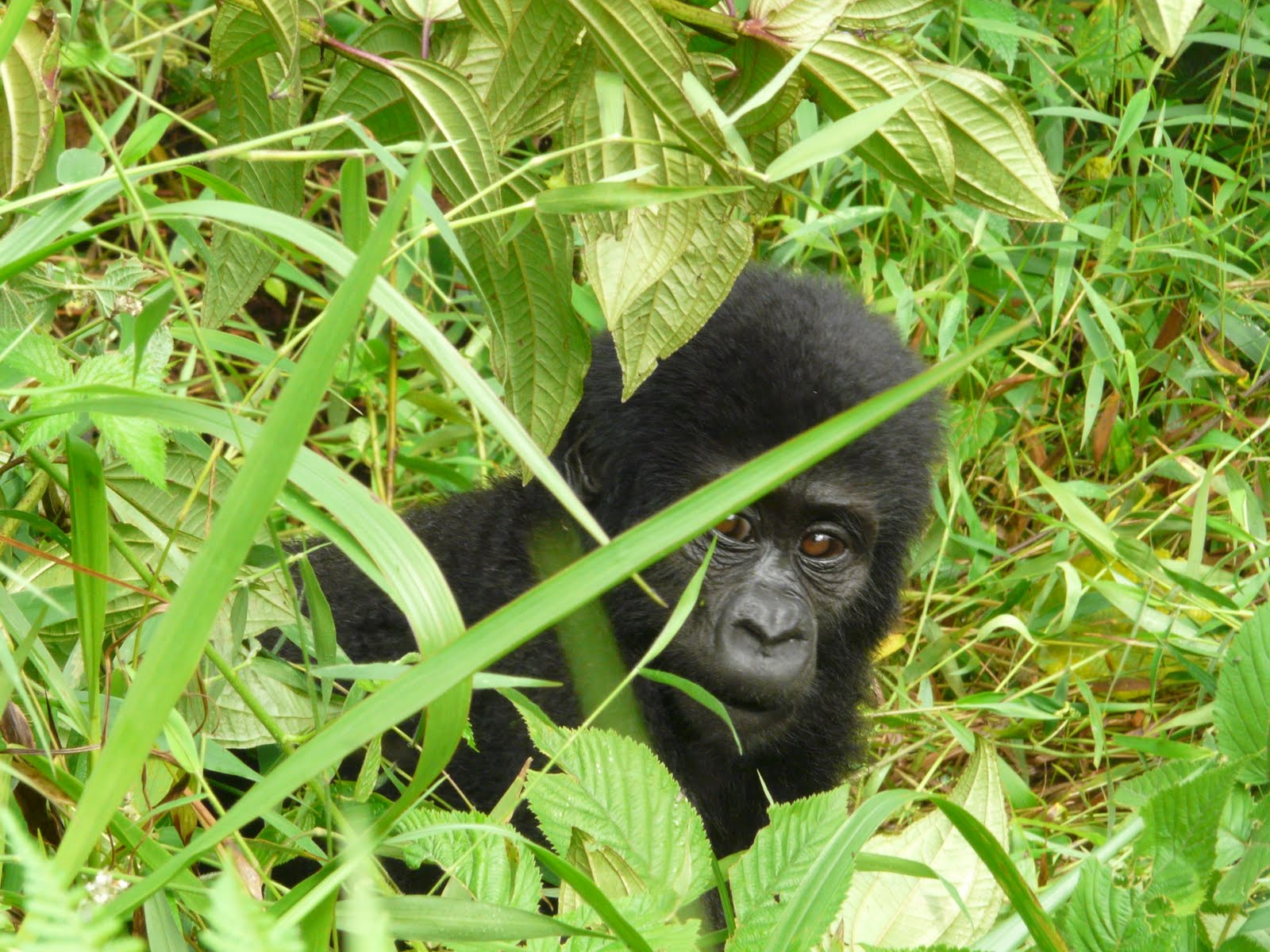
Time is running out to secure your gorilla trekking permits for dates in summer 2011. Explore our Rwanda and Uganda Gorillas trip, take a group trip, or we can customize your gorilla adventure. Remaining permit availability and dates are as follows:
Uganda is slightly less limited, however many dates are already sold out - especially in July and August. September still has good availability. Permit availability changes daily, so book your trip quickly to secure your spot for this magical wilderness experience!
We are also pleased to announce that there is now a new gorilla group open for trekking in the Kisoro/Clouds Lodge area. The group is called 'Mishaya' and it currently has 9 members. In July 2010, the second ranking Silverback called 'Mishaya' broke away from the main Nshongi group, taking 8 other individuals with him.
Our partners at Sanctuary Retreats’ lodges and camps in Botswana, Zambia, Uganda, Kenya and Tanzania all eagerly supported Earth Hour on Saturday, 26 March between 8:30 and 9:30 local time, switching off generators and all the lights in and around the camps. In line with Sanctuary's theme this year the lodges and camps all managed to “Go Beyond the Hour"! Here, they share the efforts and celebration with us.
The staff at Sanctuary Olonana, our tented camp in the Masai Mara, spent Saturday afternoon at the nearby Enkereri Primary School where Julius, one of our staff members, gave a talk on sustainable practices. Sanctuary Olonana donated 50 trees to the cause and each of the students planted their own tree. All these trees were tagged with the students’ names and we believe this will create a sense of ownership and responsibility.
Later that evening, guests in camp celebrated Earth Hour with a candlelit dinner and even asked if the lights could stay off after 9:30 pm… Sanctuary Gorilla Forest Camp’s staff and guests also commemorated the day with a tree planting session. The camp staff then launched their ‘Conservation Club’ who will ensure that though various practices they not only conserve power but also come up with innovative practical ideas on environmental sustainability at the camp.
Hundreds of candles and lanterns were lit at all of our lodges and camps during dinner, with traditional song and dance performances by the staff providing the background music and entertainment for an unforgettable night under the African stars. In Botswana Sanctuary Chobe Chilwero staff built a tree using recycled items and spelled “Earth Hour” with candles on the lawn in front of the lodge. At Sanctuary Sussi & Chuma in Zambia, the guides led a stargazing presentation well into the night - showcasing Sanctuary’s pledge to “Go Beyond the Hour”. Want to visit one of these great eco-lodges? Give us a call to plan your trip! Photos courtesy Sanctuary Retreats
Have you been gorilla trekking yet? As they say, no time better than the present. However the present is selling out fast! Our latest report from Rwanda has July and August nearly sold out for gorilla permits, and June is on track to sell out as well. If you want to share in this special natural wonder this year, the time to book is now.
We have both private and group departures for Rwanda gorilla trekking. If you have more time, check out our Rwanda and Uganda Gorillas 2011 trip. If you want to really experience all that Rwanda has to offer (including chimpanzee trekking!), our Unforgettable Rwanda will fit the bill.
We also have myriad of trips to Uganda, including our Ultimate Uganda Safari, which gives you a gorilla trekking experience as well as highlights such as Murchison Falls National Park, where The African Queen was filmed. There are thirteen primate species in Uganda and you'll have the chance to see plenty of them on this trip!
Don't forget you can check out You Tube for some of our gorilla footage. You can also read some first hand trip reports here and here.
After our community visit, my guide and I headed off across southwestern Uganda to the Nkuringo area of Bwindi. The drive is breathtaking. After getting back to the 'main' road, we took that road essentially to its end. The hills became steeper, and if possible they seemed greener. That may have been the storm clouds making the scenery looking dramatic!
We drove through the town of Kisoro, arriving just after what must have been a very substantial rain storm. The streets were running with water - knee deep in some places. People were picking their way through town trying to stay somewhat dry while balancing goods on their bicycles or their heads. It was a chaotic, colorful scene.
We had another hour and a half drive from Kisoro to our lodge. The area we drove through seemed less developed and more remote than anything we had experienced so far. There was less agricultural development due to the steepness of the landscape, and the hills were packed ever more tightly together.
We finally arrived at Clouds Lodge around dusk. This beautiful lodge is perched at the very top of one of Bwindi's hills, surrounded by forest. It is community owned, and employs its staff from that same community. The clouds were in fact present, swirling just below us on the mountainside. I was warmly welcomed by the staff and escorted into the lodge for a quick briefing. This had to go in the books as the best briefing ever, as it was accompanied by a complimentary hand and arm massage from the local spa staff.
The main lodge is airy and light. It has several fireplaces for cool nights and is full of couches that just beg to be curled up on with a book or a drink. The bar is at one end, while the elegant dining room is at the other. It has a veranda around 2 sides, with fantastic views of Bwindi and the Virungas beyond. Every day is a different view depending on how clear it is or where the clouds have landed, but every day is beautiful.
My room, or perhaps I should call it a villa, was just down the hill from the main lodge. It had a porch with another tremendous view and was surrounded by flowers and trees, with its own little garden in the front. Once inside, I found an enormous sitting room with those same welcoming couches and my own fireplace. The bedroom was as light and airy as the sitting room with an enormous bed, and access to the same pass through fireplace. The bathroom was large and luxurious with a shower.
Meals at clouds are fantastic. In the mornings, I enjoyed custom made smoothies with mint and ginger, muesli and a cooked breakfast (essential when trekking!). Lunches were hearty but not too heavy; things like salads and fishcakes. Dinners were sublime; three course affairs with expertly executed dishes with surprisingly creative sauces and desserts that I couldn't resist.
My second day of trekking could not have been more different from the first. The ranger station is only a few minutes walk from the lodge, and is much smaller than the Buhoma area. There is only one group to trek to see from here, with a total of two groups in the Nkuringo area. There is a small village and shop area outside the ranger station.
Nearly all of the trekkers wisely hired porters this time (see why that is important here). We began our trek from the ranger station. Trekking from Clouds to the gorillas is downhill, which is unique. It also means your return trek is uphill! The trail is very good for most of the way, and you don't reach the forest until you hit the valley floor and pass by the tracker's camp - about an hour into the hike. We once again lucked out with the weather and needed sunscreen rather than rain gear for our hike.
Once in the forest, it was only a matter of minutes before we were told to leave our gear with the porters and to take our cameras and follow the guides to the Nkuringo family group. We excitedly crept through the forest to the group and suddenly found ourselves nearly in the middle of it. They were feeding on the ground and in trees; there were babies, adolescents, black and silverbacks all within sight.
The gorillas were obviously comfortable with our presence and continued their feeding without interruption. One blackback came and sat directly in front of our group. He had a small wound on his left hip which he almost seemed to be showing us. Our guide confirmed that this family does in fact show the rangers and trackers any injuries they have in the manner we were witnessing. After he gave us a good, long look at his wound, the gorilla moved on to feed some more.
We enjoyed what felt like quite a long time of uninterrupted viewing of the gorillas as they moved around the clearing feeding, as well as the fun of two juvenile gorillas playing up in the trees. The group finally started to move off and as we still had time left in our hour we were able to follow them further into the forest for a bit more observation. At one stage, the silverback slapped the ground two times not far in front of me; I could feel it through my feet! This behaviour is considered to be one that prevents conflict between and among groups.
The final and most exciting part of the day for me was when one of the blackbacks (named Karibu - thank you in Swahili) sat nearly at my feet to feed. Because of the dense vegetation, I was unable to back away, so the guide advised me to stay put. The gorilla sat peacefully feeding for a few minutes before moving on his way, continuing to follow his family. Our time was finally up, and we left the Nkuringo family with regret, but also with joy at the privilege of spending time with one of the planet's most amazing creatures.
I mentioned before that it was difficult to put the experience of observing mountain gorillas in the wild into adequate words, and I feel I've had the same struggle in this blog. What I can say is that it is one of the most profound nature experiences that I have ever had, and is certainly amongst my favorite and most memorable experiences I have had in Africa. When we returned to the lodge, I enjoyed an afternoon massage which worked the fatigue out of my muscles and refreshed me immensely. The spa at clouds is simple, but the treatments are wonderful. I spent the rest of the afternoon in the lodge reading and talking with other guests. During our sundowner drinks, we were treated to a performance by a local youth community group. They sang and danced for the guests, incorporating the importance of gorillas to the community into their performance. (see performance video on our You Tube channel!)
We have several itineraries available that offer gorilla trekking in both Rwanda and Uganda. If you wish to stay at Clouds Lodge (and I can't recommend it highly enough!), we can create a customized itinerary for you. Just give us a call!
Next: Arusha and the newly opened Mt. Meru Hotel!
First photo courtesy Clouds Lodge. Remaining photos and video Gretchen Healey
Gorilla trekking in Bwindi - Habinyanja group - Gretchen's trip report #3
Trekking day, I had a 6:30am wake up call, which gave me enough time for a delicious cooked breakfast and to gear up for hiking. I took the packed lunch that Gorilla Forest Camp provided and loaded it into my backpack along with my rain jacket, camera gear and water. It was plenty heavy once loaded up, but I knew I would be hiring a porter before setting off.
I can't stress enough that anyone gorilla trekking should plan and budget to hire a porter. There are lots of reasons to do so, but the most important one is this: you are providing a local person with employment, which in turn incents them to continue to protect the gorillas and their habitat. Better yet, I can promise you that on a difficult hike, you will be grateful to not be carrying an awkward and heavy backpack and even more grateful that someone is there to help you on particularly difficult terrain. I am fit and I hike nearly every weekend year round at altitudes up to 14,000 feet, and I was plenty pleased to have hired a porter. It was $15 very well spent.
My permit for my stay in Buhoma was for the Habinyanja group, so after the informational session and briefing at park headquarters we headed off in our vehicle for an hour's drive to get to the trekking start point. Our hike began in an agricultural area but was a well utilized trail and was easy going initially. After the first hour or so, we broke off on to a smaller trail through cultivated fields, which was surprisingly steep and challenging with all of the dense crops and vegetation. We had a few stream crossings then eventually came upon a gorilla nest from the previous evening when we neared the edge of the forest.
Our UWA (Ugandan Wildlife Authority) ranger was in constant contact with the trackers, who reported that our habituated group of gorillas had just had an encounter with a wild group and the silverbacks had engaged in fighting. As a result, we had to do a fair bit of back tracking and enter the forest at a different place. In the meantime, the gloves had come out to hang on to vegetation while climbing steep hills, and the gaiters had done their job keeping safari ants and stinging nettles from annoying me.
We finally entered the Impenetrable Forest. We were immediately enveloped into the canopy, which was actually a cool relief from the blazing sunshine that had been upon us all day (lucky weather to be sure). The sounds were dampened and we could hear more birds and primate life around us, replacing the cheerful calls of local residents as we hiked by.
Another 25 minutes of up and down and we were in range of the gorillas. We put down our walking sticks and bags, grabbed only our cameras, then proceeded to a clearing where we spent an enchanting hour with the H group. They were resting under the forest canopy as a family; a few were feeding, but most were grooming and the young ones were playing.
It is hard to express the feeling I had while spending time in such close proximity to these magical apes. They come across as extremely gentle and you can see very clearly that they care for one another. One can also imagine the ferocity that might be possible in a rival silverback encounter, though I would stress that in my two days with the different gorilla groups, all that I witnessed was gentle, calm behaviour.
Each gorilla clearly has their own personality. The young were full of energy, and the youngest, a four-month-old infant, was so obviously treasured by his mother. The dominant silverback was watching over his family, as well as sitting down to groom and be groomed. Interestingly, the gorillas seemed to know when our hour was up; right at the appointed time, they rose from their family relaxation and slowly made off as a group. The hour seemed to go by in a flash, but I remember every moment of it like it only just happened.
The hike back was less arduous as we didn't have any of the backtracking, but the overall hiking time was near six hours. Getting back to the vehicle felt like a victory, and the shower and cold drink back at camp were immensly refreshing! I also took advantage of the opportunity to visit the Batwa (or Twa) community the next morning before my departure. A local guide took us on a walking tour of the nearby village. We were privileged to meet a number of people and get an intimate look at local industry. We saw a (banana) distillery and how banana juice, wine and gin are all produced, we walked through coffee and tea growing enterprises, and we also visited a local witch doctor who showed us a few of his secrets. These were just the highlights. It was nice to get an on the ground picture of the local community and to interact with some of the residents in this beautiful part of the world.
Next: Trekking to find the Nkuringo group from Clouds Lodge!
Video taken with a Flip video camera - it weighs nothing and slips into a pocket. Undoubtedly not the highest quailty, but fun for a novice videographer!
The first iPhone and iTouch application dedicated to protecting the critically endangered mountain gorilla has been launched, and millions of iPhone and iTouch users worldwide can download the app to follow the daily lives of the mountain gorillas and stay up-to-date with the efforts of the rangers to protect Virunga National Park.
The application costs $3.99 and can be downloaded from iTunes. It allows users to select a gorilla family, find out about individual members and follow them through blogs and videos directly from the remote forests of eastern DR Congo.
“The survival of Congo's mountain gorillas relies on our ability to reach out to individuals around the world who care, and to keep them informed on a daily, even hourly basis, of the rangers’ efforts to protect the wildlife in Virunga National Park,” says Emmanuel de Merode, Director of Virunga National Park. “iGorilla provides us with exactly that opportunity.”
New Gorilla Rescue Center to Open in Eastern Congo
10 orphaned gorillas which were rescued from poachers in Rwanda and Congo will be airlifted to the Democratic Republic of Congo (DRC), by the U.N. Peacekeeping Force in DRC. They will be at the new Gorilla Rehabilitation and Conservation Education Centre (GRACE). The gorillas have been traumatized by violence and mistreatment and need treatment; they must learn how to survive in the wild. GRACE centre is located next to 222,000 acres of forest in the community-based Tayna Nature Reserve.
Gorilla trekking was the highlight of my visit to Rwanda. I joined three other visitors in trekking for Group 13, a family of 26 led by the stately Silverback Agashya.
Gorilla trekking begins with an early morning check-in at Volcanoes National Park headquarters in Kinigi. Visitors are divided into groups based on which gorilla group they have been assigned to. Those of us trekking for Group 13 then drove about 30 minutes up the hill, then walked another 30 minutes through family gardens planted with beans, potatoes and maize. When we reached the 4-foot stone wall that marks the parks border we were told the gorillas were very close. In fact, we could even see a juvenile peeking out from the upper branches of a small tree. At first we were told the gorillas would be coming out to snatch a few snacks from the locals' gardens but they did not appear so we hopped the wall and walked a mere 30 yards to where a female and youngster sat eating leaves. It was so easy that it was actually disappointing! I had been looking forward to at least a brisk hike in the forest. (Apologies to all who suffered on our marathon gorilla trekking in 2006.)
Disappointment was soon forgotten as we found new members of the group including fat bellied females, rambunctious adolescents, tiny babies and finally the Silverback. He gave us a look, took account of his group, then lay down for a rest, moving only when wrestling youngsters bumped into him. More group members moved in providing new chances for photos and before long it was time to go.
After lunch at the newly opened Gorilla Mountain View Lodge, I visited the nearby cultural village to see some dancing and crafts, we visited the well perched Virunga Lodge before staying the night at the spectacular and expensive Sabinyo Silverback's Lodge.
Today after breakfast we made the 2.5-hour drive back to Kigali where I visited the Genocide Museum. It's difficult to convey the emotional impact of a visit to this excellent museum. It does a fantastic job of explaining the root causes and development of what ultimately became one of Africa’s greatest tragedies. I consider it a must-see on any visit to Rwanda.
I arrived two hours before my flight to Nairobi--good thing as it took off 30 minutes early! Now I'm once again cooling my heals in Nairobi Airport on my way to Tanzania. Arusha here I come.
1. This country is really hilly. 2. It can be sunny and cloudy at the same time. In a related note, I can feel happy and sad at the same time here. 3. Tea plantations are beautiful but I like Rwandan coffee better. 4. Most Rwandans are really skinny. Could be all the walking up steep hills. 5. Half the mountain gorilla population resides in Rwanda. 70 percent of them are habituated to humans for tourism or research. 6. Primus and Mutzig are the two Rwandan beers. Both are good. 7. Mountain gorillas love to eat bamboo shoots. 8. Mountain gorillas fart a lot. 9. I'm not sure if there is any correlation between numbers 7 and 8. 10. 800,000 people lost their lives in the 94 genocide and the country is working hard to deal with the past and move forward.
1. Order your coffee, beer, lunch, dinner, etc. well before you actually want it. We're on Africa time here.
2. Brush up on your high school French. Many people speak English here but a little French goes a long way.
3. Learn a few words of Kinyarwanda. For example, bite (bih-teh) means hello.
4. Hit the Stairmaster before you come. I'm not exaggerating too much when I say I haven't seen a flat spot in the entire country. My guide Alex claims there is open savannah in the East.
5. Bring some sturdy hiking boots. Trekking chimps and gorillas and general hiking can be very slick and slippery.
6. Keep cameras, passports and other valuables in a zip lock bag to avoid damage from moisture.
7. Bring your raincoat. Even in the dry season, showers can make things uncomfortable if you don't have one.
8. Bring your cell phone: Cell coverage is really excellent here if you have the right bandwidth (Check with your service provider). If you have a crackberry like me, then bring it and you'll be able to email and surf the net (for a price). And that's good because very few hotels have internet. (See pic - at this nice hotel I was excited to see the internet room but inside there were no computers!)
9. Don't bring your cell phone. Yes, I did write #8 but I also remember traveling in Africa before there was much cell service and being out of touch made the adventure even greater.
10. Gorilla trek as many times as possible-every $500 permit is worth every penny.
In addition to being the cleanest African country I've seen, Rwanda must also get the award for the most nimble farmers. These people can grow crops on the steepest terrain I've ever seen. Bananas, cassava, beans, peas, maize and more are planted, tended and harvested seemingly at a 70 degree angle with little if any terracing.
They call Rwanda the land of a thousand hills but really it's more like 100,000. It’s difficult to describe their beauty and seemingly even harder to capture it on film. Suffice to say that if you tried to design a more perfect mosaic of green hues, you could not.
My trip has been greatly enhanced by my guide, Alex. Born in a Tutsi refugee camp in Uganda in 1960, he was one of the first to return to Kigali after the genocide ended in 1994. He's been a postal worker, hotel work, and pineapple exporter, and is now an enthusiastic and entertaining ambassador for the new Rwanda.
Today’s chimp trekking was very nice. It was steep and slippery and I did get an unplanned foot wash when I fell into a stream, but overall it was beautiful and fun to see and hear the chimps. It was also very relaxing-like meditation-to be in the forest.
This afternoon we had a bumpy ride north along the shores of Lake Kivu…which is really stunning. In one town it was market day and we saw large canoe style boats ferrying Congolese back to their country after unofficial trade visits. Now I'm enjoying a Primus beer as a lightning show is beginning across the lake in Congo.


 Uganda is slightly less limited, however many dates are already sold out - especially in July and August. September still has good availability. Permit availability changes daily, so book your trip quickly to secure your spot for this magical wilderness experience!