April Mara Game Report - part 2
Part 2 of the Mara game report from our partners at Governor's Camp in Kenya. Call us to plan your visit to this special area! Rhinos, as usual, have remained the more elusive of the Big Five. Even so, two males and a female with a  three month old calf were seen fairly regularly between Chemorita and Paradise. Cheetahs were also less visible last month due to the movement of the bigger predators. The three brothers were seen in the Salinga area towards the middle of the month, after which they moved into the Paradise area. A young female was on Topi Plain for some time. The big herd of buffalo that seems ever present at the western base of Rhino Ridge was still very prominent last month. They too have many youngsters at foot. These grand beasts are often over-looked but can offer hours of entertainment should one take the time to sit and watch them. There is a definite method to their movements and their actions that bears observation. Their interaction with various bird species can be of especially great interest.  The "little critters" remained captivating last month. Birding has been good as the avian migrants are still around, but are soon to leave. One of our guests left Kenya having seen 203 species in 10 days. No mean feat considering he only visited Lake Nakuru National Park and the Masai Mara! Of course we are all waiting for the rains to come and the wildebeest that are sure to follow. We had to be very careful where we put our feet last month as there were huge collections and processions of "siafu" (safari ants), a sure sign that this is on the way. Once again nature moves through its processes as it has since time immemorial, seemingly with no big method but definitely with a plan and an end goal. All one has to do is quietly observe and all becomes clear. Photos courtesy of Samantha McLellanLabels: game report, Governor's Camp, Kenya, Masai Mara
April Mara Game Report - part 1
From our partners at Governor's Camp in the Masai Mara comes this review of game activity during April.  Once again we experienced dry weather during the first week or so of the month - it just didn't seem to want to rain! There would very often be a big build-up of clouds all along the western and north-western horizon which would raise our hopes, but the first decent, soaking rains only came fairly late in the month. Last month's spate of rain (where it rained heavily for about four days) meant there was (and still is) lots of water in the marshes and luggas, which attracted a big collection of herbivores, especially zebra, wildebeest and elephant, in these areas. The Marsh Pride has been seen  regularly around Bila Shaka and has fed there almost every night. It is amazing to see fifteen lions all together around a kill! The lioness with her four three month old cubs was seen a number of times around Musiara Swamp. They are still fit and healthy and seem to be making progress in, to them, what must seem like a harsh world. These poor little fellows were really thirsty one day and had the unfortunate experience of all falling into the murky water! One cub was covered in mud and mewled incessantly like a distressed child! The Paradise Pride has been seen mostly around the crossing below Serena Lodge, but on some days as far a-field as Chemorita. Notch and one male seem to have the urge to patrol more than the other males and these two have been seen between Rhino Ridge and Salinga on a number of occasions. One particular game drive vehicle was treated to the spectacle of about 16 hyenas trying to chase 6 lions off a warthog kill on the far southern reaches of Rhino Ridge. The lions were having none of it, but the noise and interaction was quite fantastic to experience!  Leopards were seen fairly regularly last month, in fact as often as three times a week. A mother with two cubs was seen around Paradise quite often and on one day five leopards were seen together. These were the same three as mentioned above with two males. Watch this space in just over three month's time. The existing cubs are close to the age where they would leave their mother, so perhaps more youngsters are on their way! Of further interest was another female leopard with a cub of three months old in the "Base" area. Photos courtesy Katie McLellan and Samwel KiplangatLabels: game report, Governor's Camp, Kenya, Masai Mara
March Mara Game Report - part 2
Thanks to our partners at Governor's Camp in Masai Mara for this March game report.  Rhino lived up to their reputation and were ever elusive. Our drivers were patient and persistent however, and amazed many guests with their uncanny ability to almost sense where these prehistoric beasts were. Various individuals were seen but memorably, towards the middle of the month, three were found together - mother, calf and adult male. The adults were mating! Watch this space in fifteen month's time!  Towards the middle of the month we were treated with a douse of extremely welcome rain! The whole Mara seemed to take a deep breath and change into a new gear. The Mara River rose almost immediately and very soon a different pattern of animal movement became visible. Cheetahs, for which fairly large distance had to be travelled previously, were seen much closer to our camps. This is most likely because of there suddenly being a greater availability of food for herbivores and their subsequent decrease of movement. Less prey movement meant less large predator movement and thus a relatively safer environment for less robust predators such as cheetahs.  More water meant a better deal for elephants and indeed, a large number (in big groups as opposed to the smaller family groups of February) is still to be seen around the marshes. The African Green Heart tree is still bearing fruit and there is still a group of elephants that visit the camps regularly to take advantage of the shorter grass and Green Heart fruit. A little more work for our watchmen to keep us forewarned and a marvelous sight for all!  An interesting phenomenon brought about by the rain is the slow return of the Loita zebra to their residential area. As conditions improve the attraction of home draws them south and east of us. Many of them had been caught on the "wrong" side of the Mara River and, amazingly, a crossing of some seven hundred zebra and - fourteen giraffe - was seen on the 29th of March! Only one poor little zebra was caught by crocs.
Photos courtesy Samuel Kiplangat and Kate McLellanLabels: game report, Governor's Camp, Kenya, Masai Mara
October Mara Game Report - Part 2
 Here is part 2 of the latest game report from our partners at Governor's Camp in the Masai Mara. Enjoy the latest news of the big cats! The Marsh Pride of lions have been spending their time at the Marsh in front of the Governors' Camps as they have for the past few months now, they are seen as far as Bila Shaka river, which is still close by. The pride hunt at night and are found coming back to the marsh after following the wildebeest which are on the move further afield. The lioness with the three younger cubs tends to stay behind. The pride males are mostly with the pride; the older male Claude happy not to move very far as he still has a bad limp and has become dependent on the lionesses. The sub-adults from the previous litter are spending all their time away from their maternal pride. The five males have been moving along with the wildebeest towards Paradise Plains, they had killed a young hippo which is quite a feat for the young fellows. Two large but young nomadic males slipped into the Bila Shaka area where the sub-adult females have been and mated with two of them. Being too young to have cubs, these females took exception to the intrusion and fought them off. The nomads have not been seen again. The Ridge Pride has not been seen much with only two reported sightings of two of the lionesses and four cubs.  They may be confused with other lions as they follow the migration into other territories. The Paradise Pride has also been fairly elusive. The three females and their six cubs being seen on most days near the main crossing area. The other females and cubs must be further into the croton bushes or have moved across the river. The five males which are nearly the same size as Notch now with deeper darker manes have been moonlighting elsewhere. Only two have been seen a few times with Notch. Notch has been mating with a single lioness, she has not been sighted after their ordeal either. Finally we have found Shakira, the cheetah last seen nearly a year ago with three large cubs. She was first spotted beyond Talek river toward the Ol keju Rongai river and not alone, she has six 4 - 5 month old cubs. She is definitely one of the most successful cheetah mothers in the Mara. We presume her three cubs are still well and somewhere in the Mara Triangle west of the Mara River. Shakira has been killing most days, we had a wonderful sighting of her taking do  wn a fully grown Grants Gazelle and all the cubs called over to feast. The female and her one cub with the bad eye have been seen regularly, she has jumped up on a few cars as well much to peoples delight. The three male cheetahs were around the Governors area the first few weeks of the month, then venturing further over the Talek river towards 'Look out hill'. We had a short time with the mother and two male cubs at the beginning of the month, she then moved on into the Ol-Kinyei area and has as yet not returned. Olive the leopard has been seen regularly and together with her two sons on occasion, who seem reluctant to  leave home. Olive disappeared for a couple of weeks during the month, some people believing she may have been pregnant and could have a new litter, we will be sure to keep you posted. There have been sightings of the female with one cub higher up on the Ntiakitiak river as well as another female not too far away up on the Talek river with her two older cubs. The Il Moran leopard has been around, preferring the denser growth of the forest and keeping away from the company of lions and baboons during the day. She has been seen up at the marsh hiding behind fallen trees and keeping a low profile. Late in the evening once the baboons band back together to head back to the trees she relaxes and will become a bit more visable. Otherwise there have been a couple of fleeting sightings of male leopards along the forest line near the camps. Photos courtesy of Justin GrammaticasLabels: Governor's Camp, Kenya, Masai Mara, wildlife
October Mara Game Report - Part 1
Here's the latest weather and game report from our partners at Governor's Camp in Kenya. October is one of the most exciting months in the Mara as the migration enjoys one of its peak times. Weather & the plains The Masai Mara had plenty of rain in the first two weeks of the month, with rain showers becoming isolated and lighter towards mid month and drying out in the last week. Towards the end of the month the midday temperatures were higher, reaching around 30 Celsius and the days longer. The sun is rising noticeably earlier with first light at 6am. The grass on the plains has been short and lush, it would be a couple of feet higher after the unseasonal amount of rain we have had over the last months, but for the constant grazing by the zebra and wildebeest. Fireball and Pyjama lilies dot the plains bringing unexpected splashes of colour to the grasslands. The Wildebeest MigrationOctober h  as been a great month for the wildebeest migration, the vast herds moving around a little more, following the smell of rain and searching for the new nutritious growth. From one day to the next they moved around, travelling from the marsh area, over Rhino Ridge and to the Talek River and back again. The last two weeks of the month saw the majority moving south towards the Serengeti, but some large groups remained in the area and we managed to see some really good river crossings. The crocodiles were still hunting the wildebeest as they crossed. There have been huge herds of zebra moving into the long grass which still stands at this late stage, followed by the wildebeest and topi. These immense herds have been providing spectacular game viewing from the hot air balloon. The resident Loita migration has settled back into the Northern part of the Mara. The Loita plains to the east which can be seen on the flight to Nairobi before the rift valley drops away has not received the rains that the Mara has. Resident WildlifeOur very large resident buffalo herd with all its maturing young has spent most of its time in search of any remaining long grass that the zebra and wildebeest may have graciously left behind. They return every few days to the marsh for water or drink from the pools left by the seasonal streams leading to the Mara river. The buffalo herd practiced a great survival tactic, giving birth to their young whilst the migration were in the area, this meant their main predator  s, lion and hyena were busy preying on easier game. Most plains game had their calves in October in anticipation of the November rain. The gazelles and warthog gave birth toward the start of the month and the impala, topi and hartebeest at the end. Right now there are some very anxious and protective mothers, bounding away from the slightest threat with their calf following in hot pursuit on their precarious legs. The elephant have some very young calves too, still so small they fit easily under their mother's chest and with a thick protective coat of bristled hair. We have had a few migratory birds through the Mara: European and White-fronted bee-eaters, Montagu  e and Pallid harriers, Common Kestrels, Steppes Eagles, African Cuckoos, Spoon-billed storks. There have been a couple of rare sightings of Egyptian Vultures. The trees and lianas in the Mara River forest have been flowering and fruiting, one in particular the Turrea floribunda has flowers and has a beautiful scent almost like Jasmine. The Pristemera polyantha seeds have dropped off and fly away cleverly as mini helicopters. The bright red fruit of the Lepisanthes senagalensis is a big favourite with the baboons as well. We have had few sightings of the rhino our side of the river, but on one occasion a male just stayed undisturbed whilst our guests managed to get some great shots and spend some time with him. The ballooners have been lucky enough to see the mother and calf and a male rhino on many of their flights and game drives.  The Mara River hippos are very content as they have plenty of grazing, although moving further out on to the plains than usual. There has been the odd mating, but no serious fights and territorial displays, so all fairly peaceful in the river. Photos courtesy of Justin Grammaticas and Sue LawlessLabels: Governor's Camp, Kenya, Masai Mara, Migration, wildebeest, wildlife
September Mara Game Report - part 2
September Game Report, Masai Mara, Governors' Camp - Part 2As promised - here is our predator update for the Maasai Mara, courtsey of Governors' Camp. The core part of the Marsh Pride of lions have been happily lazing around the Musiara Marsh area this month. The pride is basically divided in two; the two males Romeo and Claude and four females, three of which are with young having three cubs each. The fourth female was sighted mating with both males at the start of the month, Romeo dominating as Claude the older lion is not in great condition. The sub-adult group are spending their time up near Mbila Shaka and on occasion come down to the marsh. There are five males and four females together with a lioness, Lispy. Lispy towards the end of the month came into season and ventured down to the marsh and picked out Romeo, a good choice, and commenced mating. The Marsh Pride have been hunting at night. The sub-adult males took down the old buffalo bull outside of Governors' Camp which was a fair accomplishment even though he was in retirement and a little worse for wear. One of the more spectacular sightings seen below the marsh bridge was all of the sub-adults trapping a large male waterbuck in the water. The waterbuck held his own, facing off any attempts that were made toward it by the lions surrounding him. This started at dawn and went until well after lunch when the waterbuck bolted once the lions lost interest and lay watching.  The Ridge Pride is still doing well, staying up on the ridge where the wildebeest have been. They too had an interesting development; whilst on a walk the three lionesses and four cubs came across a mother cheetah and her two adult cubs which they promptly chased for a while. In their excitement they had not noticed the kill which the cheetahs had to leave in a hurry, but wandered on. They then spotted a hyena which had just killed a young wildebeest and chased him of his meal and settled into their easily won prize. The Paradise Pride is in great shape. Dominating a territory that encompasses the main crossing areas means they have food coming to them instead of having to pursue their prey. However they choose to hunt at night and relax during the day, very rarely is this pride seen hunting during the day. The pride across the Mara river from them is very different. Often seen at the crossings hiding up in the croton bushes, they ambush the unsuspecting hoards of animals that have just tired themselves out swimming through the rapids. On one occasion a single lioness killed five wildebeest. Notch has been seen on both sides of the river with his two prides, where his five sons have split and are seen east of the river up in the Croton bushes. We have mostly seen the three cheetah boys this month who are not short of female admirers as other cheetahs have moved on.  There has been one female cheetah and her two nearly fully grown cubs near double crossing, she did come to Rhino ridge but was chased off by the Ridge Pride. This is probably why she spends her time further away. One other female cheetah has been seen near the Talek River, once walking right by Olive the leopard. Olive is still as relaxed as ever, giving guests amazing views of her near the Talek River in the Croton bushes. Her two cubs have moved on, leopards are not very tolerant of their cubs once they come of age, there are very rarely any free meals once they leave home. The two cubs are sticking together for the moment, they need to build up their confidence before they secure territories of their own. The young male leopard from Olives' previous litter is in a neighbouring territory, he has been spotted a few times, once dragging a fresh wildebeest kill across the ground into cover.  The Il Moran leopard near Governors' has rarely been seen as the Marsh Pride is so incumbent and she has retreated to the forest. A male leopard was sighted along the forest near the Little Governors crossing. Whilst waiting for a crossing one of our vehicles saw a female leopard being chased out of the adjacent bushes by baboons creating mayhem amongst the mounting herds of wildebeest. Once everything had calmed down, what presumably was an older cub ran out in pursuit of its mother and stirred the wildebeest into another state. There are a couple of jackal dens up on the plains in old termite mounds, the youngsters are nearly fully grown but still dependant on their parents. At one site hyenas tried to dig out the young whilst the adults were running in and nipping at their behinds, the hyena soon ran off.  We also had two sightings of caracal in September which was very lucky, one mother had cubs too. With high season well underway the camps have been as busy as ever. We have also had wonderful sightings of game in camp with elephants putting in regular visits to all camps, much to the delight of guests. Elephant families have been making a habit of turning up at Little Governors' Camp at lunchtime leaving camp staff to escort guests to a safe distance away to view these magnificent animals as they pass through camp! If you'd like to visit Kenya, or Governors' Camp and all of its amazing wildlife, call us to start planning your trip! Photo credits:Waterbuck and lion standoff courtesy of Daryl Black
Three cheetah brothers courtesy of Samuel Kiplangat
Leopard courtesy of John Knott
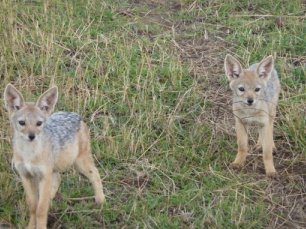
Jackal pups courtesy of Alex Millar Labels: africa, africa news, Governor's Camp, Kenya, Masai Mara
September Mara Game Report
September Game Report, Masai Mara, Governors' Camp - Part 1Weather and the plainsSeptember saw a fair amount of unseasonal rainfall through the month, filling up the Musiara Marsh. The water came gushing under the bridge to the airstrip and on to the Mara River. The Mara River has been consistently high, mostly due to rain at its watershed in the Mau forest. The temperatures have been very pleasant, rising to a maximum of 30 Celsius around mid day. After gorgeous mornings, it has mostly become overcast in the afternoons and raining on the odd day.  Storm over the Mara courtesy of John knott Storm over the Mara courtesy of John knott
The grassland plains have been mowed down by the migration, leaving a bright green thick mat with the unpalatable dried stalks left standing, giving the impression of dry grass from a distance. The Wildebeest Migration
We have had one of the best migrations seasons ever! Dense concentrations of wildebeest and zebra have covered the plains. The herds have tended to group together at night, spreading out as the day progresses to dot the grassland. Similarly to the end of August hundreds of thousands of animals were to be seen from Governors camps looking out onto Rhino Ridge and to the east. Mid month they started moving around and over the ridge but returned again to The Marsh. The river crossings have been plentiful in September, from a few zebras to a few thousand wildebeest. The fat, ancient crocodiles still take the odd animal as they cross the Mara River, but are mostly content to watch from the sand banks as they have had their full. The river is littered with carcasses from panicked animals drowning because of the large numbers, high water and difficult exits. This is in stark contrast to last year's crossings where they mostly skipped across the river as it was so low, the crocodiles had to work hard for their meal then.  Wildebeest migration herd disturbed by leopard courtesy Justin Grammaticas Wildebeest migration herd disturbed by leopard courtesy Justin Grammaticas
Elephant and giraffe have avoiding the masses of wildebeest and zebra, with the occasional elephant family coming to the forest every few days or so. They are to be mostly found up in the acacia woodland areas at this time, where they are feeding. The large buffalo herd with their young still frequent the marsh and return up onto the ridge, the bachelor males looking from a distance resigned to the fact they are not wanted. With the bursts of rain and the promise of more, and the charge of greenery in the Mara many of the antelope herds have been mating. The males were seen rutting and asserting their territories, once the lines have been drawn and lesser males placated, they then get on with the business at hand. Gestation periods range mostly according to the size of an antelope, the smaller gazelles and impala approximately 6 months whilst the larger waterbuck and topi 7 - 8 months. This instinctual timing coincides with the seasonal rains that commence toward the end of March, giving the young new lush grass to graze on and taller grasses to hide in.  Elephant family courtesy Justin Grammaticas Elephant family courtesy Justin Grammaticas Beautiful wild flowers have started springing up amongst the shorter grass, 'tissue paper' flowers Cycnium tubulosum, fireball lilies Scadoxus multilorus bringing a contrast of red to the plains as well as the pyjama lily Crinum macowanii with its white and purple stripes. Dung beetles of all colours and sizes are busying themselves attempting to clear up what the wildebeest have dropped. Termites take this mammoth job on too. 'Flying ants' termite reproductives have taken to the sky to pair up and start new colony's. Timed with the rains so the earth is soft they dig down to start a new kingdom. They are a delicious meal to a lot of animals as they are packed proteins to sustain themselves whilst they create workers - birds, aardvark, aardwolf, bat-eared fox, mongoose and more all eat them. The resident baboons are spending a lot of their time along the roads as the runoff from the rain has produced thick new nutritious shoots which they are feeding on. They will sit for hours near the roads providing great entertainment. Game Report courtesy Governors' Camp. Stay tuned for part two, with updates on the area's big cats! If you'd like to visit Governors' Camp and all of its amazing wildlife, call us to start planning your trip! Labels: africa, africa news, Governor's Camp, Kenya, Masai Mara, Migration
|
|


 three month old calf were seen fairly regularly between Chemorita and Paradise.